
Negaresh: How Problem-Solving Becomes the Engine of Innovation
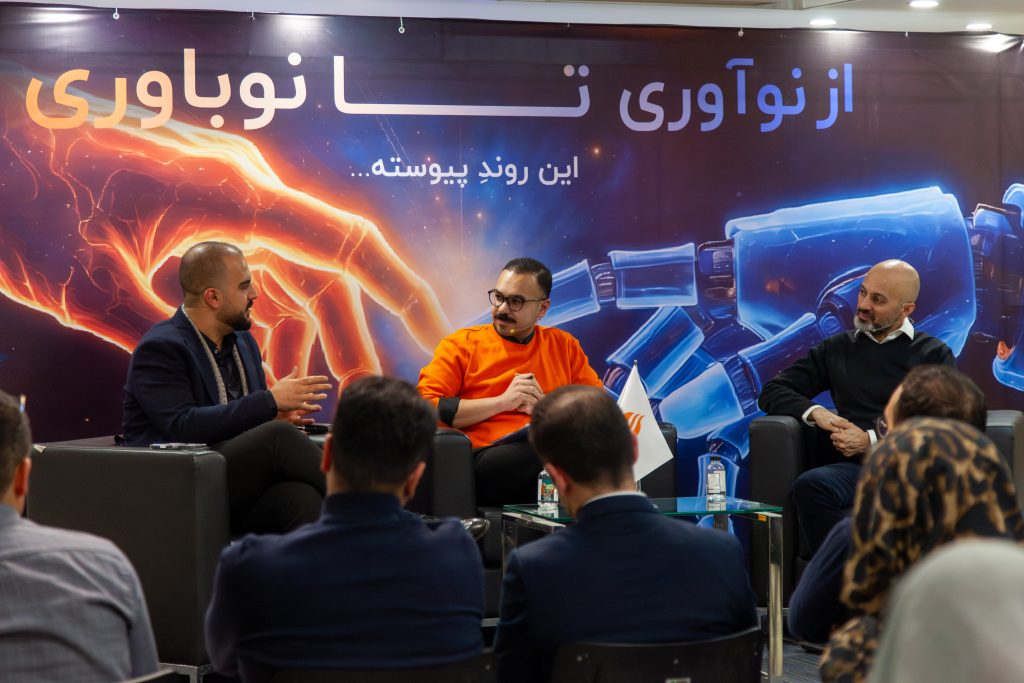
Everything in the world is created twice: once in the mind and once in reality. Innovation, before appearing in human-made tools, takes root in the human mind and human belief. It begins by building trust, answering a need, or solving a problem. An innovative mindset is born from renewed belief. It requires rethinking old assumptions, revisiting past learnings, absorbing new insights, analyzing them and forming new convictions that shape and anchor innovation.
At the fifth Negaresh event at Dana Energy, under the title “From Innovation to Fresh Vision: A Continuous Journey”, we hosted two guests who embody this mindset. Ali Jahani, CEO of the Bitpin cryptocurrency trading platform, explored the evolution of innovation in human transactions, from barter to minted coins and paper money, all the way to today’s digital currencies. Hassanali Zad, co-founder of Kargadan Creative Agency and communication and brand strategy consultant, spoke about innovation in creativity and the influence of deep cultural beliefs on innovative thinking.
Innovation Through the Lens of Human History
This Negaresh event continued the thematic line of earlier sessions where we had agreed that the progress of Homo sapiens is tied to tool-making and that, in the words of Dr. Vahdatinasab, humans have always triumphed through technology. We turned to new questions. In this tool-driven process, what is the role of innovation? Does innovation lie only in the tools or also in beliefs and needs? Do human relationships generate innovation or can a creative mind do it alone? And do these elements eventually transform into new beliefs?
Ali Jahani revisited the story of money to define innovation. Over time, trust in intermediaries who handled transactions across different regions weakened. This led to the rise of central authorities and later central banks with asset-backing systems. Today, innovations such as blockchain, through decentralizing power and authority, have become instruments for rebuilding trust in human transactions.
Trust as the Hidden Driver of Innovation
Hassanali Zad continued by discussing trust in human relationships as a force that drives innovation. A lack of trust can push us toward creative innovation. We build solutions that address challenges created by the absence of trust, and these solutions fuel development. This process is closely linked to the belief systems of human communities. The innovations and the value they create solve problems, and this continuous path is passed on to later generations.
The conversation then turned to innovation inside organizations. In Ali Jahani’s view, innovation becomes truly active within an organization only when it becomes one of the organization’s values. This value requires investment. Organizations spend on what they value. When innovation is not defined as a value, it receives no investment and the cycle of innovation inside the organization remains incomplete.

What Motivates Humans to Innovate?
The question of what drives humans to innovate was then raised. Perceived need, dissatisfaction with current conditions and the ambition tied to progress and a growth mindset were identified as key motivators. These forces can push individuals toward innovation. When this mindset is present in leaders, it can guide an entire organization toward new ideas and transformative change.
These drivers, infused with culture and existing belief systems, take on distinct forms of creativity and become innovation and renewed belief. From this perspective, Hassanali Zad pointed to Iranian proverbs as examples of both resistance to innovation and openness to it. Sayings like “Trying what has already been tried is a mistake”, “Do not bandage a head that does not ache” and “Old age is no time for showing off” reflect attitudes that conflict with creativity and growth. In contrast, sayings like “No pain, no gain”, “A new day brings new fortune” and “Find a path or build one” express beliefs aligned with innovation, change and growth.
All of these ideas lead to innovation only when the mindset emerges from a real need and aims to solve a problem, for example when moving from an undesirable state to a better one by building trust in a space defined by distrust. In such conditions, innovation appears at individual, social and organizational levels.
A Q and A session then followed between participants and the guest speakers, bringing the collective understanding of the event closer to a shared meaning.






We Answer Your Questions