
Negaresh Welcomes Ehsan Abdipour at Dana Energy
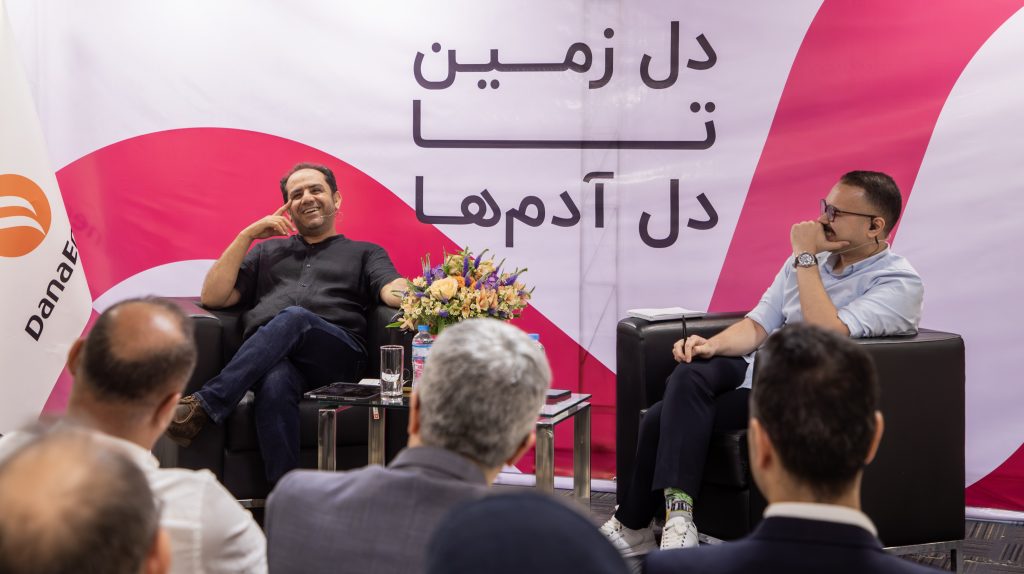
From the Heart of the Earth to the Human Heart
Every life is a film composed of countless scenes. Yet, as filmmaker and storyteller Ehsan Abdipour reflected, there are those rare, defining scenes that shape our stories and become the turning points we carry with us forever. The latest edition of Negaresh at Dana Energy explored how listening to people’s stories and embracing resilience can transform both our personal journeys and the way we grow together as an organization.
On Sunday, July 19, colleagues gathered for a morning unlike any other. Side by side, we listened to stories about people we had never met, yet somehow came to know. We laughed together. fell silent, fought back tears, and sometimes we let them fall.
If this were the pages of a film journal, we would introduce our guest as an award-winning filmmaker, novelist, screenwriter, television host, and artist. But those titles tell only part of the story. Ehsan Abdipour is also one of the most authentic voices of southern Iran, a region whose people and spirit are deeply familiar to Dana Energy. It is a land where oil rises from beneath the earth, and where the people who call it home have long taught lessons in resilience, humanity, and, as Abdipour himself put it, “how to live joyfully in the midst of hardship.”
At its heart, this edition of Negaresh was an invitation to look beyond our own perspective. Listening to another person’s story reveals dimensions of life that often remain invisible until someone chooses to share them. Every life can be framed from countless angles. Change the frame, the window, or the lens, and the story changes with it. That is the quiet miracle of storytelling. It allows us to see, hear, and understand the world in ways we could not before.
The Stories We Carry With Us
One story in particular lingered long after it was told. Abdipour recalled seeing a drill resting on the rooftop of a Bosch dealership at the intersection of Sanaie and Shahin streets. The memory became an unexpected path back to his grandfather, whom everyone affectionately called Agham. As he brought the story to its close, he said:
“Agham is in heaven now. He looks after the canals. If somewhere a waterway gets blocked or the flow begins to slow, that’s Agham’s job. He’s the one who fixes it.”
To know what lies within people’s hearts begins with stories like these. Stories deserve to be heard, remembered, retold, and preserved. Perhaps that is humanity’s truest form of immortality.
Perhaps it also begins with simply knowing one another. Looking after one another. Carrying each other’s burdens with empathy. Abdipour spoke of trying not to sound even one unnecessary car horn, or to do anything that might leave him indebted to another person. He illustrated this through the story of a man recovering from addiction who had once stolen a streetlight. Years later, seeking to make amends, the man wondered whether returning the lamp could ever truly settle his debt. What if, while that corner remained dark, a child had fallen and been hurt? What if a pregnant woman had been frightened by a barking dog hidden in the darkness? Could those unseen consequences ever be undone?
It was a reminder that the impact of our actions often extends far beyond what we can see.
The Courage to Create Our Defining Moments
Abdipour also reflected on a verse by Rumi:
“Yet from action, more action is born in this world.”
The verse speaks to the defining scenes that shape every life. Even an unsuccessful attempt carries more meaning than never trying at all. We create the unforgettable moments in the films of our lives only when we choose to act, not when we hesitate. They emerge when we choose to act, each of us in our own way and to the extent that we can.
The distance from the heart of the earth to the human heart is shorter than we imagine. One heart always finds its way to another. Stories travel where facts alone cannot. And the oil drawn from beneath the earth ultimately tells another story: the story of the people whose lives, kindness, resilience, and humanity endure long after the moment itself has passed.




We Answer Your Questions