
Global Electricity Demand and the Future of Energy
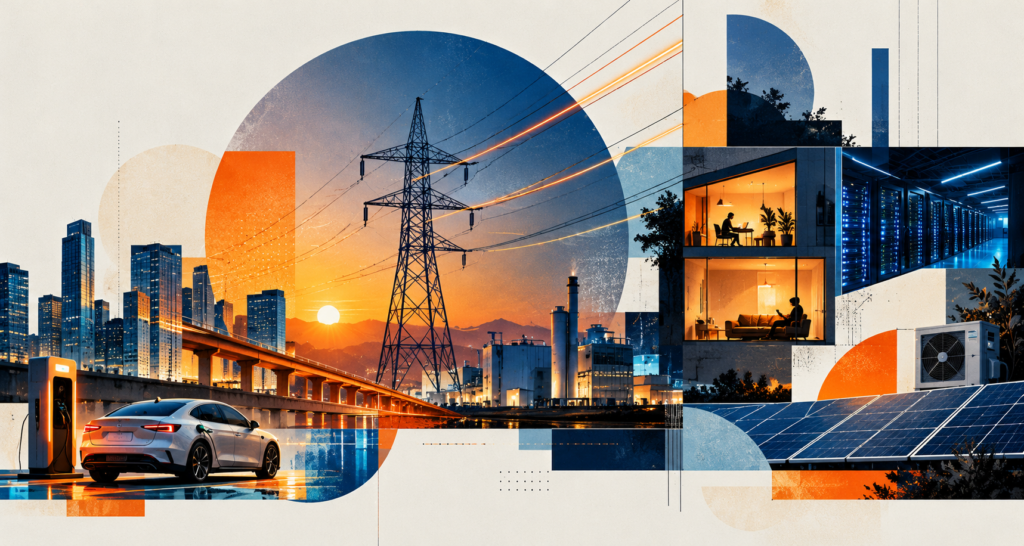
Electricity is becoming an increasingly important driver of economic growth, industrial competitiveness and energy security. As artificial intelligence, data centres, electric vehicles and advanced manufacturing expand, the world is entering a period in which electricity demand is growing faster than overall energy consumption. Meeting this demand will require more than additional generation. It will depend on how effectively energy systems can deliver reliable, affordable and increasingly low-emissions power.
Why electricity is gaining ground
Electricity already plays a central role in modern economies, powering homes, factories, transport systems and digital infrastructure. According to the International Energy Agency (IEA), it accounted for around 23% of global final energy consumption in 2025, while powering economic activities responsible for nearly half of global GDP.
Its significance extends beyond the amount consumed. Electric technologies can convert energy into useful services more efficiently than many conventional alternatives. An electric vehicle, for example, converts a much larger share of its input energy into motion than a vehicle powered by an internal combustion engine. This efficiency can reduce energy waste and operating costs, although the overall benefits depend on electricity prices, equipment costs and the way power is generated.
The growing use of electricity is also being shaped by new sources of demand. Artificial intelligence and data centres require substantial power, while electrification is expanding across transport, buildings and industrial processes. Together, these developments are changing the relationship between energy consumption and economic activity.
Demand growth brings new system challenges
The IEA’s *Electricity 2026* report forecasts that global electricity demand will grow by an average of 3.6% annually between 2026 and 2030. This pace reflects the expansion of industrial activity, electric mobility, air conditioning and digital infrastructure.
However, increasing generation capacity alone will not be enough. Electricity must also be transmitted and distributed to where it is needed, at the right time and with sufficient reliability. In many markets, investment in power grids has lagged behind investment in generation, creating congestion and delaying the connection of new projects.
The IEA estimates that annual grid investment would need to increase by roughly 50% by 2030 from its current level of around USD 400 billion to meet projected demand. Modernising existing networks, expanding transmission capacity and improving system flexibility will therefore be essential. Grid-enhancing technologies, demand response and battery storage can help make better use of available infrastructure while longer-term upgrades proceed.
Reliability is equally important. As economies become more dependent on electricity, disruptions can affect industrial production, digital services and essential infrastructure. Ageing assets, extreme weather, cybersecurity threats and concentrated technology supply chains all add to the challenge of maintaining secure power systems.
Electrification and the economics of energy
Electrification can also strengthen energy security. Countries that replace some imported fuels with domestically generated electricity may reduce their exposure to international price shocks and supply disruptions. The extent of this benefit depends on the availability of local energy resources, the cost of infrastructure and the reliability of the electricity supply.
The economic case is not identical across every sector or region. Electric technologies may already be competitive for applications such as low- and medium-temperature industrial heat, certain transport uses and building heating. Other applications face higher costs or technical barriers. Aviation, shipping and some energy-intensive industrial processes, for example, are more difficult to electrify directly.
Investment decisions must therefore account for local conditions rather than assume a single pathway will work everywhere. Electricity prices, financing costs, existing infrastructure and access to equipment all influence the pace of adoption.
Building a more flexible energy future
A more electrified economy will require a coordinated approach to energy supply, infrastructure and demand. Renewable energy and nuclear power can contribute low-emissions electricity, while natural gas and other available generation sources may continue to support reliability in different systems. Storage, stronger grids and more responsive demand can help integrate a changing mix of technologies.
Electrification also does not automatically guarantee lower emissions. Its climate benefits depend in part on the emissions intensity of electricity generation and the efficiency of the technologies being deployed. Expanding low-emissions power alongside electrification is therefore critical to achieving meaningful reductions.
For the energy industry, the implications are practical. Future investment must consider not only how much energy can be produced, but also how reliably it can reach consumers, how efficiently it can be used and how resilient the supporting infrastructure will be.
The Age of Electricity is not simply a story of replacing one technology with another. It is a shift in how economies produce, move and use energy. Its success will depend on the ability to match growing demand with dependable infrastructure, sound investment and a diverse, adaptable energy mix.
This article draws on publications by the International Energy Agency (IEA), including:



We Answer Your Questions