
Coaching, Culture and the Work of Change
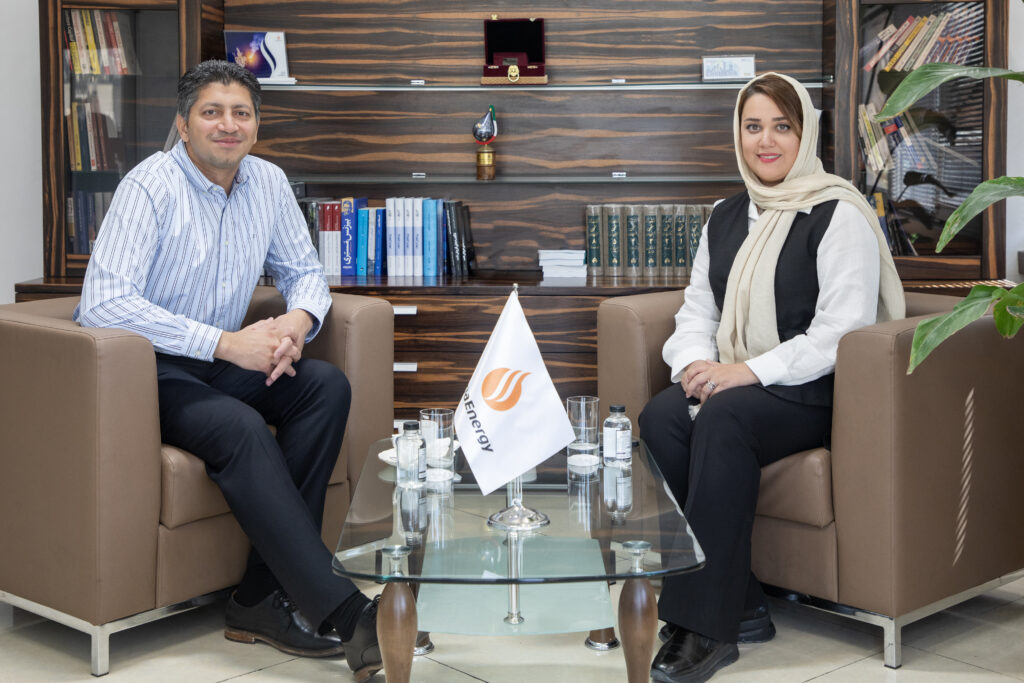
This conversation explores Dana Energy’s experience with introducing coaching into the organization, a process that began through the development of Human Resources and organizational culture before expanding to executive and middle-management coaching. Conducted in collaboration with CoachingWays Middle East, Mohammad Reza Iravani discusses why Dana Energy turned to coaching, how the process was implemented, the resistance some executives initially showed, the importance of trust and confidentiality, the challenge of finding time for coaching sessions, the effectiveness of the experience, and how coaching fits alongside other development methods. He also reflects on organizational maturity, the role of the manager as coach, and his own experience with coaching.
Naghmeh Ghafoori: Let’s start with what led Dana Energy to coaching. What need did you identify that made you think coaching could help the organization?
Mohammad Reza Iravani: Let me start with a brief overview of the history of Human Resources at Dana Energy. In 2015, with the support of the HR director at the time, Dana Energy went through a restructuring. The following year, in 2016, we established Shared Services, with Human Resources as one of its functions. The idea was to provide centralized and integrated HR services across the organization, which had four different segments and around 10 to 15 business units across different locations. The geographical nature of the oil industry also contributed to that spread.
Our approach at Dana Energy and within Shared Services was to design and implement different HR functions and services gradually, with each service responding to a clear need from the business. We were not in a hurry to launch everything at once. For example, in 2017, our focus was compensation and benefits. In 2018, with a new HR director joining the organization, we shifted our focus to recruitment and learning. In 2019, we worked on employee development and employee experience. In 2020, the focus was performance management, and by 2021, we felt we had reached a point where we could start working on organizational culture.
Around that time, new advisors also joined us. Using the Denison-Quinn model, we surveyed the organization, including our executives and CEO, to understand both the current culture and the culture we wanted to build in the future. The results showed that, overall, Dana Energy preferred a clan-oriented culture.
To explain this concept across the organization, we worked with our advisors in the HR think tank to translate it into six leadership codes. One of these was “People change,” another was “The best way to teach is to learn and teach,” and another was “Trust makes everything easier.” We then assigned an ambassador to each of these codes. And who better for those roles than our executives?
In 2022, several of our colleagues were working with CoachingWays, which is how we became familiar with coaching as a service. While we were exploring whether coaching could be used within Human Resources, our organizational culture project also reached a point where it was ready to make use of the service.
The idea was to assign each leadership code to one of the executives. We did this through a survey, asking some of the organization’s long-standing employees which executive they felt would be the right ambassador for each code. We then also sought the CEO’s input and made some adjustments to the selections.
Our organizational culture advisor then encouraged us to hold dedicated sessions for the executives. These sessions were intended to give them an opportunity to work on themselves and use the coaching service, while also helping the coaches understand which leadership code each executive represented. That way, if the behaviours, concerns, or issues they raised offered an opportunity to work on that particular code, the coach could support them in doing so.
So the need emerged from there. We had identified a culture we wanted to promote across the organization. We believed our executives needed to be at the forefront of that effort, and we felt they needed support to do it. That was where coaching came in.
Naghmeh Ghafoori: How did you implement the process?
Mohammad Reza Iravani: Because the service was new to us, we tried to follow the guidance we received from Ms. Goharin and the methodology she recommended. We started with three-way meetings involving the HR manager, the relevant executive and the organizational culture advisor. In these meetings, we explained that we wanted to provide the executives with a dedicated service that could support them with their day-to-day challenges. At the same time, each executive was an ambassador for one of the leadership codes, and we expected them to promote that code through their own behaviour.
The first session was then between the coach and the coachee. The principles of coaching and confidentiality were explained, and we also gave the executives the freedom to choose their coach. Based on what we knew about the executives, we initially grouped the coaches into two or three options and recommended more experienced coaches for people dealing with more complex or deeper issues. However, if an executive did not connect with their coach for any reason, they could change coaches.
That happened with one or two people. One executive even said at the beginning, “I don’t need a coach. I’m doing just fine as I am,” and did not participate for the first few months.
Naghmeh Ghafoori: Did he really resist?
Mohammad Reza Iravani: Yes. He resisted until the middle of the year. Around three or four months passed, and by September he went to the CEO himself and said that he wanted to join the process. He was a very tough person, so I suggested that the most experienced coach, Ms. Goharin, take him on herself. I even told her that I did not have much hope that she would get a result. She said she had worked with difficult people before and that this was nothing unusual.
We started the process and tried to stay faithful to the methodology we had been given. The coaching sessions continued for an average of eight sessions through the end of that year. When we first briefed the CEO on the program, a representative from CoachingWays also joined and explained the service. The CEO supported it from the beginning, but on one condition: at the end of the program, we had to show him that it had been effective. That was always an important concern for us. If we could not demonstrate its effectiveness, we would not have the support of other executives.
Naghmeh Ghafoori: What was the outcome of the program?
Mohammad Reza Iravani: By the end of 2023, most people had completed their eight sessions by February and March. Some asked to continue, and those who reached 11 or 12 sessions eventually brought the process to an end. Those who had fallen behind because of their workload also completed their sessions. One or two people stopped after the third or fourth session because the process and the focus on that particular goal were no longer a priority for them.
We provided coaching to around 15 executives in 2023. In spring 2024, we felt it was time to assess the effectiveness of the program. Working with CoachingWays, we designed a number of questions, interviewed the executives, and converted the results into a quantitative report.
The report showed that around 70 to 80 percent of the executives considered coaching effective. Their feedback included positive changes in their interactions with colleagues and their managers, as well as the value of having a space where they could speak more openly without feeling judged.
We then gathered all the executives in the VIP conference room, with the support of the HR supervisors and managers, and had them talk about their coaching experience in front of the CEO. Two or three people gave particularly detailed examples of how coaching had helped them. The majority of the feedback was positive, although there were one or two people who, in my view, had not established the connection they needed with the process.
Another finding was particularly interesting to me. Around one-third of the executives said that, despite having had a positive experience and considering coaching effective, they wanted to continue.
To me, that shows how personal coaching is. It depends on the individual’s personality, behaviour and needs. Some people may learn the method and continue on their own, while others may want to return to it after a period of time. I found it particularly interesting that CoachingWays gave both the executives and the organization that freedom and choice, allowing each person to decide how they wanted to continue.
Naghmeh Ghafoori: What was your own experience with coaching?
Mohammad Reza Iravani: My personal experience with Ms. Goharin was that we had put too many topics into the contract. We had identified, for example, five issues to work on over seven or eight months, and I felt that was too much. This was also one of the most difficult periods of my leadership in the organization, and I think coaching was very effective for me personally.
I attended six sessions, and I felt that I had reached the outcome I was looking for within those six sessions. I was also extremely busy. I was not one of the people who failed to connect with the process; my workload simply did not allow me to complete all eight sessions.
Interestingly, coaching also had two side effects. In one case, one of our executives resigned during that period. With Ms. Goharin’s help, we were able to convince him to withdraw his resignation. He had been with Dana Energy for around 15 years, and his continued presence had a positive impact on us.
The second case was that same very tough executive I mentioned earlier, the one I initially thought would be difficult to change. At the end of the year, he went to the CEO himself and said how effective coaching had been for him. He even said that it had changed aspects of his personal life. When I compare him with the person he was two years earlier, I can see how much of that sharpness in his behaviour has softened.
After this experience and based on the executives’ feedback, many of them told the CEO in a meeting that they expected the program to be extended to the next level of management. So, in 2024, we moved to the M2 level, meaning managers and directors, which included around 18 people. We also provided coaching on a case-by-case basis to managers who were experiencing difficulties in their interactions or were stepping into management roles for the first time.
In 2024 and 2025, because of the circumstances surrounding the war, we no longer ran the program on a regular basis. It became more ad hoc and case-based. We had planned to include it in our 2026 program and had identified a number of people based on the needs of middle managers, with input from HRBPs and executives. However, as the war intensified at the beginning of the year, the decision was made not to provide the service this year as part of our efforts to reduce costs and manage the budget.
If the political situation in Iran becomes calmer and the business feels that we can invest in our people again, I think Dana Energy has had a good experience with this service and will continue it.
Naghmeh Ghafoori: You mentioned that some people resisted the process. How do you think organizations can bring those people on board? What should their approach be?
Mohammad Reza Iravani: I think the key is building trust. Part of that responsibility lies with the CEO: they need to make it clear that the sessions are confidential and that the organization will not ask for details about those conversations. The CEO also positioned coaching as an individual development program for the executives. That same year, we were also running IDP sessions, and the two complemented each other.
Some resistance also comes from a lack of understanding. I remember asking Ms. Goharin in my first session what the difference was between a coach, a mentor and a consultant, and she patiently explained it to me. The service is relatively new, and some resistance can simply come from unfamiliarity. But once people experience it, they tend to feel more comfortable recommending it to others and returning to it when they need it. So, for me, trust is the key.
Naghmeh Ghafoori: Aside from trust, what made coaching difficult to implement?
Mohammad Reza Iravani: One important issue was that the executives, as coachees, had to make coaching a priority themselves. We were so caught up in operational work that I remember cancelling my own sessions once or twice because I felt I simply could not focus.
Some executives scheduled their sessions at eight in the morning, before their operational calls started. Others held them at the end of the day. Many would leave their own floor, go to another floor, and find an empty room so that they would not be interrupted.
Finding an opportunity in the middle of all that work where you could actually concentrate and have a meaningful session was quite complicated.
Naghmeh Ghafoori: Based on your experience, do you think the issue was with coaching itself or with the coach?
Mohammad Reza Iravani: It could have been either. We did not conduct a diagnosis to determine exactly what the issue was. But among the 16 people who participated in the coaching sessions, only two had a neutral view. Nobody said the process had been harmful or that it had provided no benefit. Around 70 to 80 percent said it was effective or very effective, and only one-third said they wanted to continue.
I was one of the people who said it was enough for me. The insights I gained during the sessions and through the techniques we used took another six months to put into practice. I thought, “Let me give myself some time to implement what I’ve understood, and then, if necessary, I can come back to it later.”
My coach did not judge me or directly give me solutions. Once, she showed me a model and said that it might be useful, but even then she did not tell me what I should do. She mostly asked questions, and I would think through the issue again myself. She would approach it from different angles until I arrived at what I thought the right approach was. That is why being able to focus during the sessions was very important to me, and I used to take notes.
The most difficult part for me was that at the beginning of every session, she would ask, “What have you done since the last session?” and I had to explain what I had actually done.
But overall, the experience was very positive for me. I had several “aha” moments around the second or third session and realised what I needed to do. Change may happen relatively quickly at lower levels of an organization, but at senior levels, it takes more time.
Naghmeh Ghafoori: If a company wants to use coaching services, what should it consider?
Mohammad Reza Iravani: I think one of the most important factors is the organization’s level of maturity, particularly the maturity of its HR function. We had genuinely spent several years working on our culture. When people entered coaching sessions, they were no longer talking about the HR department. They were talking about themselves, their work and their interactions within their teams.
You cannot have an organization where the foundations for learning, performance management, goal-setting, and effective dialogue have not been established and then expect coaching to work. You need to assess how ready the organization is to absorb and make use of the service.
Naghmeh Ghafoori: If you could go back to the first time you introduced coaching at Dana Energy, what would you change?
Mohammad Reza Iravani: During the first two years, we organized coaching by organizational level and offered it to everyone at that level, although we explained that the need for coaching had to come from the individual. But if I were to do it for a third time, I would no longer organize it by organizational level. I would not say, “All middle managers should participate this year, and next year it will be the M2s’ turn.”
I would prefer the individual to want it. I would prepare a list, hold an introductory session, and if people signed a commitment confirming that they were willing to make time for coaching and commit to the sessions, then I would provide the service to them. Particularly at lower levels of the organization, I think there needs to be a genuine desire from the individual. Otherwise, it will not work.
We experienced this ourselves. Out of the 18 people, two were unable to establish a connection with the process for one reason or another. It may have been a lack of trust, not liking the coach, not having enough time, or simply not feeling the need for coaching. But what was interesting was that some colleagues who did not seem particularly inclined toward talking, conversation, or openly expressing themselves participated fully and even said they wanted more than eight sessions.
I think the space itself was attractive to them, both because of the coach’s skill and because it gave them an opportunity to sit down, think, and revisit their work, their thoughts, and the way they approached their work.
Naghmeh Ghafoori: Coaching ultimately has a cost for the organization. How do you justify that cost to the business? What is the ROI for you?
Mohammad Reza Iravani: This was something we had been told from the beginning. When Ms. Sabourian, as our advisor, suggested that we introduce coaching, she told me that it was an expensive service. But when I reviewed the budget, I realised that it actually did not account for a significant share of it. Our overall training budget may be substantial, but for a scope of 15 or 16 people, coaching did not put much pressure on the budget.
If we make it more widely available across the organization, naturally the cost will become more significant. But overall, I do not consider coaching an expensive service. For a scope of 15 or 16 people, its cost was not a significant burden on the HR budget. So I did not see cost as a major concern, because its impact on the overall budget was relatively small.
Naghmeh Ghafoori: How do you see this development method compared with other development approaches? Why should an organization choose coaching?
Mohammad Reza Iravani: In our organization, we use the competency model to focus on one competency each year, and we usually run one or two programs around that competency for different levels of management. We have also been developing IDPs for several years and designing individual training based on each person’s needs. Coaching was added alongside the IDP.
I think that when it comes to developing people, particularly adults, organizations should make different tools, approaches, and methodologies available so that people can find what works for them. One person may develop through watching films, another through mentoring, another through consulting, another through coaching, another through reading books, another through an individual development plan, and another through a classroom course. I think this model works as a development tool for both individuals and organizations.
I also have a personal story that is not directly related to coaching. About ten years ago, I had a friend who had taken a LEGO Serious Play course and was doing interesting things with LEGO. I later learned that this was called facilitation. I went to my manager at the time and said I wanted to attend one of these courses. He asked where it was. I said Denmark. He told me he would think about it and get back to me.
A week later, he called me in. In the same room we are sitting in now, which was the CEO’s office at the time, I saw the HR director discussing my course request with the CEO. The CEO was asking what Mohammad Reza’s career path was and where this course would fit into it. Mr. Deyani said that this was traditional thinking. People create their own career paths. I do not know what Mohammad Reza’s future will look like, he said, but perhaps this course could help that path take shape in the first place.
Two weeks later, I went to Denmark, attended the course, and later applied what I had learned in the organization.
When it comes to adult learning, I think two factors are very important: first, people have to want it, and second, the method has to suit them.
So coaching is one of those methods, and it is an attractive one. If I look back at our earlier experience, I would say I wish the three or four executives who wanted to continue had been able to do so, instead of organizing everything so rigidly by group and saying, “This year is for the executives, next year is for M2.” If someone wanted to continue, I would have let them.
Naghmeh Ghafoori: Many organizations run a “Manager as Coach” program, but stop there rather than moving to the actual introduction of coaching into the organization. What has your experience been, and what would you recommend to these organizations?
Mohammad Reza Iravani: At one point, Dana Energy had around 350 employees. The HR director and I could personally move around the organization, from one end to the other, and solve problems.
But when the organization grew to around 1,000 employees, particularly with greater geographical diversity, that approach no longer worked. We had two headquarters buildings, more factories and more operational bases. So the organization has been changing its approach for quite some time.
We now have a program called “Human Resource Management for Non-HR Managers.” The idea is that, in a way, you need as many HR managers as you have middle managers, so we have started empowering managers themselves. Coaching is one of the techniques that helps managers develop these capabilities.
Once an organization reaches a certain size, it has no choice but to equip its middle managers with the tools and techniques they need to manage and interact with their teams effectively. So if an organization is large, I think it has to equip its managers with these tools.
I heard from you that the “Manager as Coach” workshop has two objectives. I had always understood the first objective as helping managers learn how to interact with their teams, but I had not realised that it could also create demand for individuals to experience coaching themselves.
Naghmeh Ghafoori: Coaching can intersect with different HR processes, with different approaches depending on the needs of each process. In addition to organizational culture and performance management, where else do you see coaching being used within Dana Energy’s HR processes?
Mohammad Reza Iravani: What you said about trainees was interesting. We started a program called the Dana Energy Development Academy about one or two months ago.
Through the Academy, we are looking for people with relatively demanding eligibility criteria, including top students from selected universities. For the first cohort, we received around 800 CVs. We filtered those down to 50 candidates, and 20 were accepted after interviews. They will start next week.
These 20 people will spend three months receiving specialised training, working on specific projects and learning from some of the best instructors. At the end of those three months, the group will be narrowed down through three stages until five people remain.
During those three months, participants may be mechanical or electrical engineering students, but they will also learn skills outside their own disciplines, such as finance and analytical skills, with leading instructors working alongside them. The five people who remain at the end will be individuals who can potentially develop more quickly within the organization. One may move into economics, another into projects and another into Human Resources.
I think the idea you mentioned about using coaching in this process could be interesting for the Development Academy. I’ll take the idea forward and discuss it with others as well.
Naghmeh Ghafoori: Thank you very much for your time, and for speaking so openly and candidly about your experience. We really appreciate you taking the time to share it.


We Answer Your Questions